

Scientific Advisory Board
GIG-ARTS · Connecting research, education and debate on global Internet governance
Andrea Beccalli
ICANN

Edoardo Celeste
Dublin City University, Dublin
Katalin Feher
Ludovika University of Public Service, Budapest; KU Leuven, Leuven

Marianne Franklin
University of Groningen, Groningen

Jeanette Hofmann
Alexander von Humboldt Institute for Internet and Society, Berlin
Joanna Kulesza
University of Lodz, Lodz
Francesca Musiani
CNRS France, Paris

Riccardo Nanni
CNRS France, Paris

Niels ten Oever
University of Amsterdam, Amsterdam

Nicola Palladino
University of Salerno, Salerno

Claudia Padovani
University of Padova, Padova
Daniela Piana
University of Bologna, Bologna
Julia Pohle
Centre Marc Bloch, Berlin

Dennis Redeker
University of Bremen, Bremen
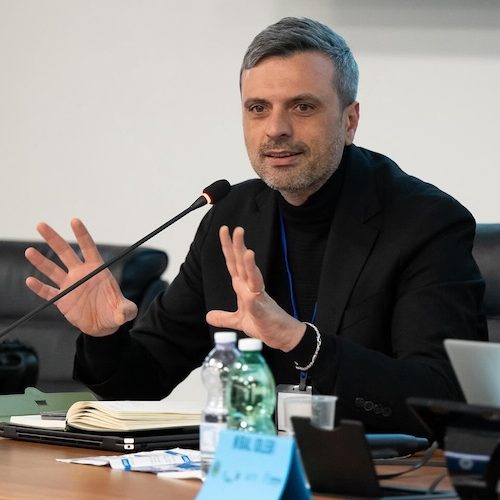
Mauro Santaniello
University of Salerno, Salerno; UNU-CRIS, Bruges

Katharine Sarikakis
University of Vienna, Vienna

Jan Aart Scholte
Leiden University, The Hague

Chiara Spiniello
University of Bremen, Bremen; University of Salerno, Salerno
The Scientific Advisory Board is a collegial body supporting the scientific quality, international visibility, and strategic orientation of both the GIG-ARTS Conference Series and the GIG-ARTS School on Digital Governance.
Its composition includes both external members and members of the Steering Committee. Membership remains open to colleagues willing to contribute actively to its work, taking into account scientific standing, disciplinary diversity, geographical balance, career-stage diversity, and commitment to the development of GIG-ARTS.
Functions The Scientific Advisory Board:
advises on the scientific priorities and long-term academic development of GIG-ARTS;
contributes to identifying emerging themes in Internet and digital governance;
advises the Conference and School teams on annual themes and programme development;
supports the identification of speakers, lecturers, Programme Committee members, and partner institutions;
promotes the international visibility and academic recognition of GIG-ARTS;
advises on research collaborations, publications, special issues, and other scholarly outputs;
supports relations with academic communities and international research networks;
provides independent advice on partnerships that may affect the scientific identity or academic independence of GIG-ARTS;
periodically reviews the scientific development of the Conference and the School.
The Board has an advisory rather than executive function. Its recommendations are considered by the Steering Committee and the relevant working teams.