Venue
GIG-ARTS 2026 will be held at the Dublin City University, which is about 4 km from the city centre. For detailed directions and campus navigation, please refer to the DCU multi-campus map. Additionally, information on how to get to campus is provided in the DCU Commuting and Travel site. Specific details related to the conference venue and rooms will be provided shortly.
Accommodation
Accommodation is not included in the registration fee and must be arranged separately.
There are numerous hotels in Dublin and the whole area close to the university. The most convenient is to stay in North Dublin.
We have contacted two service providers and attendees can book their accommodation for the conference with: the Skylon Hotel, a short walk from All Hallows campus and DCU Rooms, located on the Glasnevin campus, approximately half an hours walk or a short bus ride from All Hallows campus.
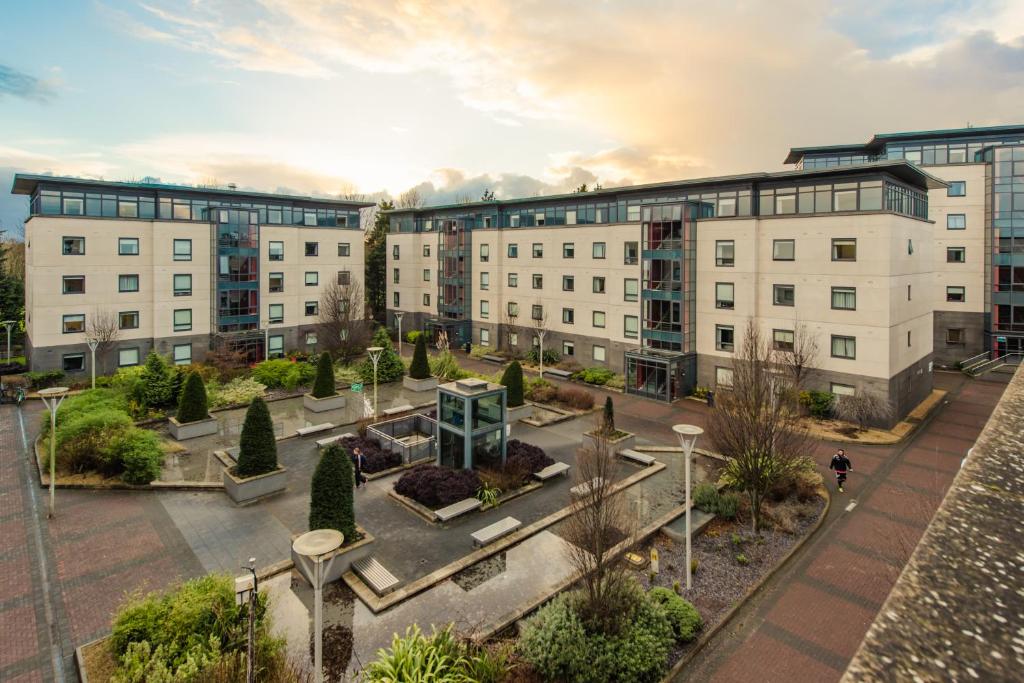
DCU Rooms
Accommodation: College Park Superior Rooms, DCU Rooms – In-Campus Accommodation
Location: Glasnevin Campus, Dublin City University (DCU)
- Availability: 20 rooms (11–16 May 2026)
- Rate: 120 € per night (Bed & Breakfast, single room)
- Booking deadline: 10 February 2026
- Booking link: GIGARTS2026 Accommodation Booking
DCU Sustainability Commitment
Dublin City University is dedicated to achieving zero carbon targets through comprehensive sustainability initiatives. DCU Rooms operates under DCU’s formal sustainability plans and environmental awards.
DCU has committed to reducing carbon emissions by 4.2% annually through 2030 as part of our science-based targets. These ambitious goals align with Ireland’s Climate Action and Low Carbon Development (Amendment) Act 2021 and the National Climate Action Plan 2021.
Our comprehensive Climate Action Plan 2021-2026, developed by DCU’s Sustainability Council, provides a detailed strategy with specific targets and actions across all university operations.
Skylon Hotel
Accommodation: Dublin Skylon Hotel
Location: Near Glasnevin campus, Dublin
Room Types, Rates, and Dates:
13th & 14th May 2026
- Double Room (Single occupancy): 179 € per night (breakfast included) – Max 20 rooms
- Twin Room (Single occupancy): 179 € per night (breakfast included) – Max 10 rooms
- King Room (Single occupancy): 199 € per night (breakfast included) – Max 10 rooms
15th May 2026
- Double Room (Single occupancy): 229 € per night (breakfast included) – Max 20 rooms
- Twin Room (Single occupancy): 229 € per night (breakfast included) – Max 10 rooms
- King Room (Single occupancy): 249 € per night (breakfast included) – Max 10 rooms
Booking Details:
- Booking deadline: 13 April 2026 (subject to availability)
- Discount code: GIGARTS (promo code, online only)
- Booking link: www.dublinskylonhotel.com
- This promo code is valid only on the hotel’s official website (not through third-party sites or agencies).
- To book:
- Go to the home page and click BOOK NOW
- Select your dates and enter the promo code
- Click SEARCH to view special rates and complete booking
- For any questions, email Daniel Fodor: dfodor@dublinskylonhotel.com
How to get to Ireland
There’s no getting around the fact that Ireland is an island. You will need to either fly or sail here and both these forms of transport have an impact on the environment. However, by making greener travel choices, you can monitor, reduce and offset your own personal carbon footprint.
Flights to Ireland
Dublin Airport is close to Dublin City University and has a number of different transport options available to get to your hotel or the conference venue quickly. Taxis are available outside of the Arrivals terminal, as are coaches and buses. The 16 and 41 buses travel from Dublin Airport directly to DCU. The 700 coach (Aircoach) also travels from the airport to Drumcondra rail station and the city centre.
Ferries to Ireland
There are several ferry options for travelling between the UK and the island of Ireland: you can choose a fast ferry or slow ferry, travel by foot or as a car passenger to Dublin, Cork and Rosslare in the Republic of Ireland, or Larne and Belfast in Northern Ireland.
Irish Ferries runs ‘slow ferry’ services (about 3,5 hours) between Pembroke in Wales to Rosslare on Ireland’s southeast coast, and between Holyhead in Wales to Dublin Port. Dublin Port is 6km from Dublin city centre. Foot passengers are welcome on most of these crossings. Irish Ferries also has a ‘fast ferry’ catamaran service, Dublin Swift, on the Holyhead to Dublin route, which takes 2 hours, although it is more prone to cancellation if the weather is choppy, in which case you will be put on the next slower crossing. Bikes may be taken on to the ferry at a cost of €10.00 each way, which you can add to your online booking.
Stena Line runs ‘slow ferry’ crossings from Holyhead in Wales to Dublin Port, from Fishguard in Wales to Rosslare in southeast Ireland, from Liverpool in England to Belfast, and from Cairnryan in Scotland to Belfast, all of which are available for both foot and car passengers. Bikes can be taken on the ferry from €10.00 each way. Choose the option for ‘bicycle’ when you book rather than ‘foot passenger’. There are train stations at Fishguard and Rosslare with easy transfers on to the ferry. Cairnryan is a bit more tricky: take a train to Ayr, then a Stena Line shuttle bus to the port.
Public transport connections at ferry ports
There are train stations at most ferry ports (including Holyhead, Liverpool, Pembroke, Roscoff and Rosslare) but here are a few more details below of facilities at some of these and other ports.
Dublin
From Dublin Port there is an hourly 53 bus service to various points in Dublin, including Connolly local DART Rail Station. There is also a private coach service which meets the Dublin Port ferries and takes you between Dublin Port and Westmoreland Street in the city centre, as well as Dublin’s Heuston Station. With fares from €3, you can book these in advance online with Ferrylink, or pay on board.
Belfast
If arriving into Belfast on a Stena Line ferry, you come into Victoria Quay. Take the 96 bus from Upper Queen Street, near Belfast’s City Hall, to the ferry terminal. The return service which meets the ferries at the terminal takes you to Donegall Place in Belfast’s city centre. Single adult cash fare is currently £2 single, children £1 single and you are advised to have cash for this one. On the Isle of Man service into Belfast, you arrive into Albert Quay, and the nearest bus stop/station is at Yorkgate approximately 10 minutes’ walk from the terminal where you can catch the number 2 bus to Donegall Square in the city centre: Belfast bus timetables.
There are frequent express trains between Belfast and Dublin, with the train journey taking roughly two hours.
There is more information available at:
- https://www.ireland.com/plan-your-trip/travel/sustainable-travel-ireland/
- https://www.greentraveller.co.uk/post/how-to-travel-to-and-from-ireland-without-flying
Carbon emissions above have been estimated for a trip from London to Dublin. They are indicative and shown only for the purpose of raising awareness on carbon emissions related to specific transportation means.
Transportation in Dublin
For local travel, Dublin’s public transport network (Transport for Ireland — TFI) offers a more affordable and convenient option, including zero-emission buses, Luas trams and DART trains. Download the TFI Live app to plan journeys, check real-time schedules, and buy tickets.
Tickets can be purchased at ticket terminals located at train and Luas stations, or by using a Leap Card, a reusable smart card that you top up with money or travel passes.
Leap Cards can be purchased in most newsagent shops, train stations and at Dublin Airport, and can be topped-up using the smartphone “Leap Top-Up” app. Please note: it is not possible to purchase DART or Luas tickets on board, and bus drivers on Dublin Bus only accept exact change or Leap Cards, not contactless bank cards.
There are multiple bus lines to and from DCU including buses 1, 16, 41C, 19, 44, E1, E2, 9, 11, 1.
Fares with Leap Card (Dublin Area)
| Type | Price | Notes |
|---|---|---|
| 90-Minute Fare (Adult) | €2.00 | Valid across buses, Luas, and DART within 90 min |
| Short Fare (Adult) | €1.50 | For short single trips |
Fare Caps (Automatic Daily / Weekly Limits)
| Period | Adult | Young Adult / Student | Child |
|---|---|---|---|
| Daily Cap | €6.00 | €3.00 | €1.95 |
| Weekly Cap (Mon–Sun) | €24.00 | €12.00 | €7.80 |
Visitor Options
| Leap Visitor Card | Price | Validity |
|---|---|---|
| 1-Day (24 hours) | €8.00 | Unlimited travel |
| 3-Day (72 hours) | €16.00 | Unlimited travel |
| 7-Day | €32.00 | Unlimited travel |
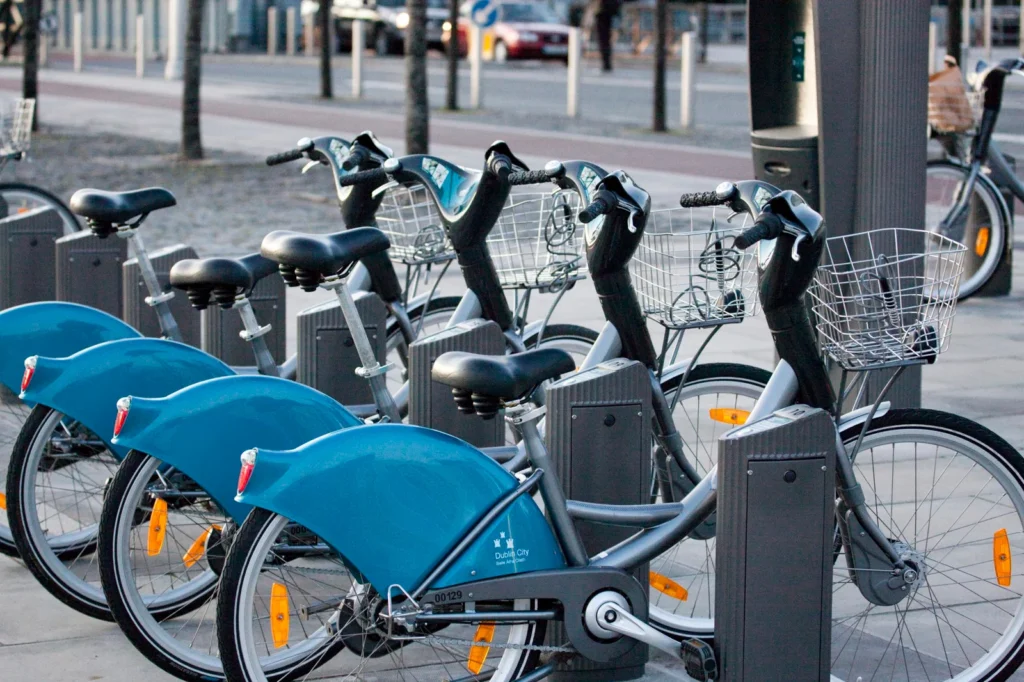
In addition, Dublin offers a range of bike-sharing and micromobility options to help you explore the city in a greener and active way. The popular DublinBikes scheme is a self-service bike rental network in the city centre with over 1,600 bikes across more than 100 stations. You can hire a bike via one-day, three-day or annual subscriptions, and typically the first 30 minutes are free with the ticket. Furthermore, other shared-bike services such as Bleeper and Moby operate around Dublin and the wider region, offering dockless or hybrid-dock bike and e-bike options.
While taxi services are widely available (for example via ride-hailing apps like FreeNow which offers “Green Taxis” or Lynks which offers electric hybrid vehicles) — and they may be convenient — fares can be relatively high for longer trips. We therefore encourage conference participants to use public transport or bike-sharing as the more sustainable and cost-effective options.
Discover Dublin
Make the most of your stay during the conference by exploring the charm, culture, and history of Dublin. From its vibrant city centre to its scenic coastal walks, the city offers something for every visitor.
Fáilte Ireland – national tourism authority of Ireland – provides curated itineraries and local recommendations to help you experience the best of Dublin. Their “48 Hours in Dublin” guide highlights must-see attractions, dining options, and unique experiences for a perfect short visit.
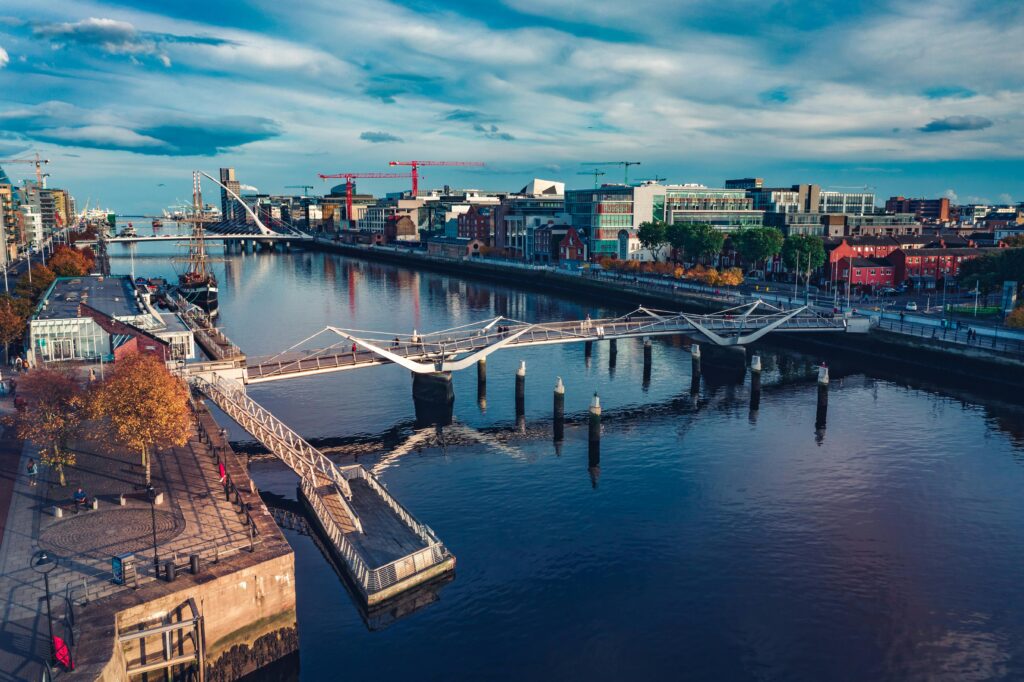
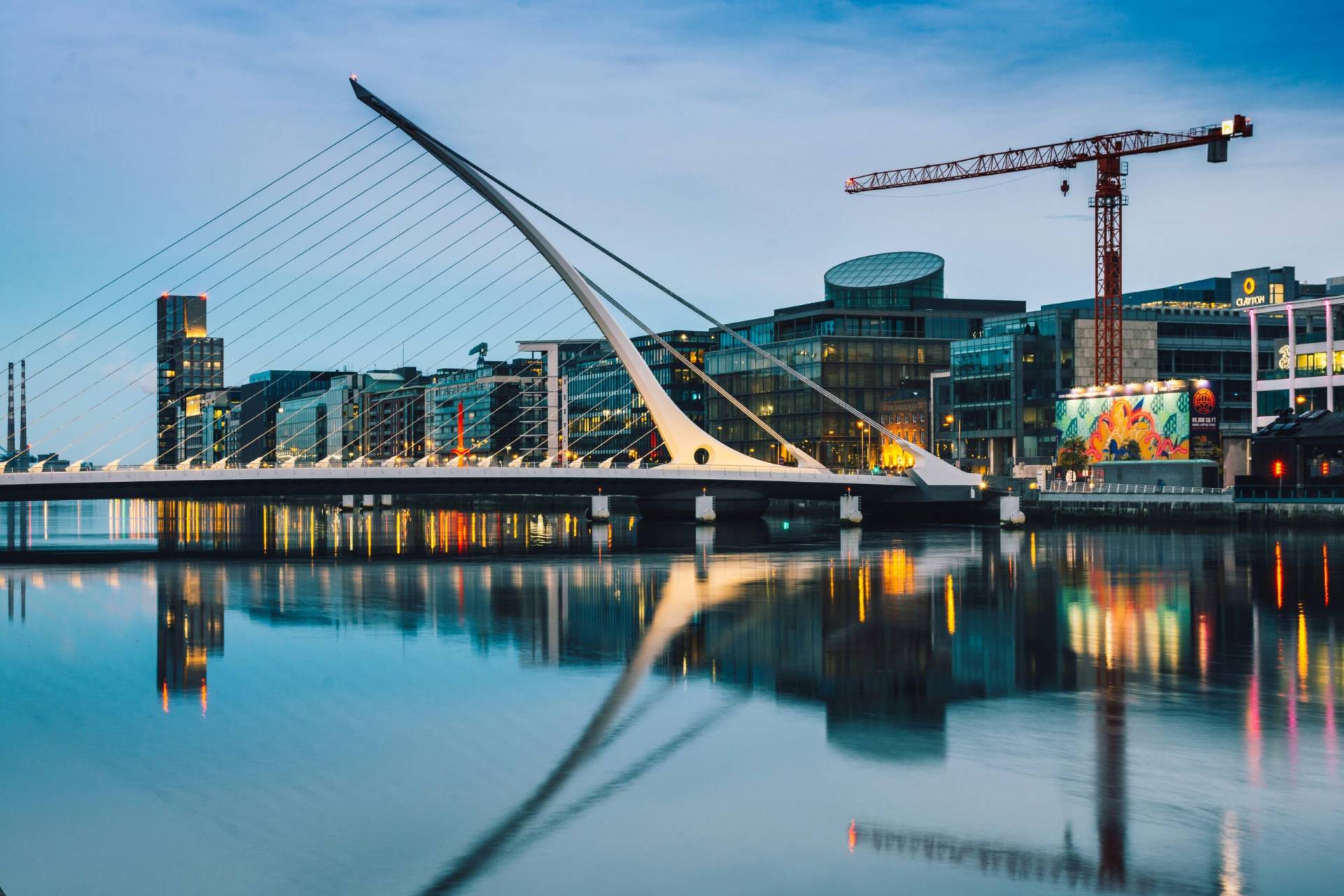
In addition, there is a selection of breath-taking views showcasing Dublin’s diverse landscapes, from panoramic cityscapes to serene coastal scenes, to inspire your own exploration.
Dublin
For trips outside central Dublin, regional buses and DART and commuter/ Intercity trains provide reliable connections. Please see the Transport for Ireland website for more information. For more flexibility, car rentals are also available throughout the city.